by Brian | Aug 14, 2016 | Planning, Wellness Matters
Wellness is a lifestyle you choose daily to manage and fulfill your needs.
Three important areas may be improved by practicing this lifestyle:
Disease Prevention
The incidence or effects of disease or illness may be reduced.
Complete, Optimal Health
We are dynamic, multi-dimensional beings and symptoms of disease or illness are the result of an imbalance in these aspects. Optimal health is related to the integration of mind, body and environment.
Positive Wellness
By cultivating positive emotional-mental states (happiness) we improve our quality of life and promote longevity.
Happiness is not an unrealistic, fluffy concept. It has been pondered, and attempts to define it go back millennia. When the forefathers of the USA were drafting the Declaration of Independence in 1776, it was included as an inalienable right in Life, Liberty and the Pursuit of Happiness.

A spiritual system to achieve Happiness is a central theme in Buddhist teachings.
Wikipedia states: Humanistic psychologists—such as Abraham Maslow, Carl Rogers, and Erich Fromm—developed theories and practices pertaining to human happiness and flourishing. More recently, “positive psychologists have developed research supporting the humanistic theories of flourishing. In addition, positive psychology has moved ahead in a variety of new directions.”
Disease prevention, optimal health and positive wellness (happiness) are all potential benefits of practicing a Wellness Lifestyle. But, how do we live this way? What is involved?
Dimensions, Needs and a Wellness Lifestyle
At the beginning of this post, I described Wellness as a lifestyle you choose and manage. This is an important concept that implies we’re responsible for the actions we do or don’t take as our lives unfold. The intent is not to strive for perfection but a steady, committed effort and growth towards optimal health and wellbeing. It doesn’t mean we live with our head in the sand and unaware that living is risky business and undesirable events can happen out of the blue, that we have no control over.
We are multidimensional beings, where each dimension overlaps and influence the others. Dimensions can interact negatively or positively, which is why wellness planning is necessary.
As we are: “In the process of achieving or striving for holistic wellness (a journey, not an end-state), people come closer to satisfying their system of basic human needs.” (McGregor 2010)
I have developed A Complete Life Wellness Plan™ for the purpose of managing our needs. It has a framework of seven dimensions that consist of the:
- Physical
- Emotional-Mental
- Intellectual
- Spiritual
- Social
- Environmental
- Occupational
Adjustments are made to each dimension as required, to create greater degrees of balance and wellbeing and are included in your plan.
by Brian | May 1, 2016 | Blog, Wellness Matters

The Indian God Shiva, at the ancient Khmer ruins Prasat Pueai Noi, in northeast ThailandYoga has been around for millennia; “the development of yoga can be traced back over 5,000 years ago, but some researchers think that yoga may be up to 10,000 years old.”
It is believed that yoga started in the ancient Samskrithi culture of Bharata, (India).
The origin of; “the word Yoga is derived from the Sanskrit ‘Yuj’ which essentially means to join or unite. The union referred to is that of the individual or the self-uniting with Cosmic Consciousness or the Universal Spirit.”
If you’re interested, check out the Yoga Sutras of Patanjali, one of the ancient Indian texts that is often cited as the basis of the philosophy behind yoga. There are eight limbs of yoga, made up of 195 sutras that focus on gaining mastery over the mind and emotions in order to grow spiritually.
Mind-Body
There is mounting medical evidence (MRI’s and other) confirming what was known long ago, that practicing yoga has numerous health benefits. This includes but is not limited to; increased strength, balance and circulation, better immunity, breathing and posture and reduced stress, anxiety, improved mood and greater self-awareness.
The remainder of this post takes an abbreviated look at that part of the mind known as ego. If you have a curious “mind” and want to know more about the ego and self-realization, there is an abundance of information about this subject online.
Some background
An article on Psychcentral.com advises that: “though the term ‘ego’ is commonly used to describe one who boasts, is arrogant, treats others with scorn, lacks empathy, and the like, the concept of ego is neutral in itself.
The word ‘ego’ is a Greek word for “I”, meaning the core sense of self, a distinct and unique expression of personhood, albeit one that paradoxically exists in connection or in relation to life and others.”
Our ego by this definition then, is necessary and when at rest, neutral. It’s also capable of misbehaving though, as described in the following paragraph!
Doing Yoga or Ego?
A post in the Elephant Journal comments: “when ego mind is the performer of postures, our mind is actively engaged in self-criticism, comparing our performance with others, and judging ourself and others. Our mind is agitated and engaged in internal conflict even as our body is engaged in performing postures. As a result of constant internal conflict, our mind is restless. Whenever we are mentally agitated, restless, emotionally reactive to whatever we are facing at any given moment, we are engaged in the posture of ego.”
Learning how to transcend or calm a “restless mind” is an invaluable life skill that is transferable outside the yoga studio.
I’m open to the possibility of “self-uniting with Cosmic Consciousness or the Universal Spirit” but also pleased to be doing yoga and not ego on a more consistent basis.
It does however require showing up, practice and some sweat!
Brian
by Brian | Apr 25, 2016 | Wellness Matters
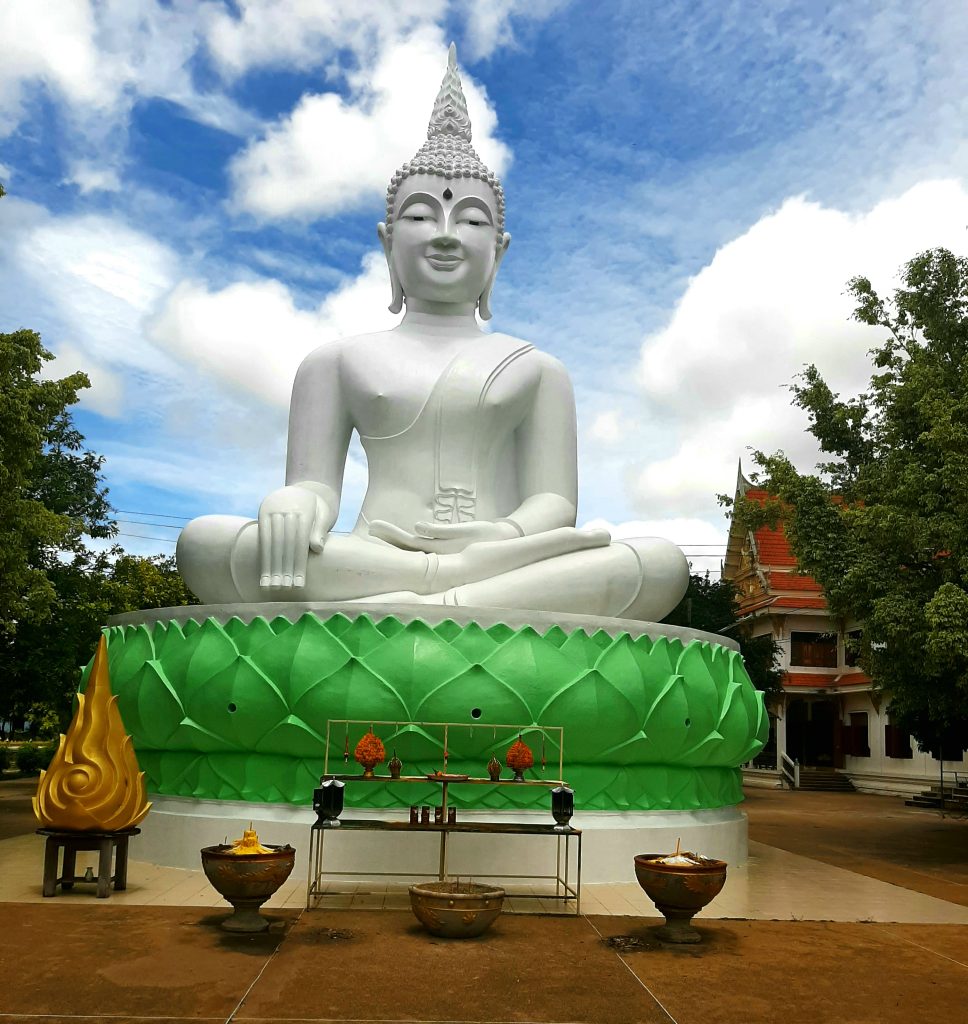
What comes to your mind when you see or hear the word “spiritual”? A common answer is that it refers to religion or religious beliefs.
Everyone has a spiritual component, but not everyone is religious. A comparison of the two is provided by the Merck Manual: “Religion and spirituality are similar but not identical concepts. Religion is often viewed as more institutionally based, more structured, and more traditional and may be associated with organized, well-established beliefs. Spirituality refers to the intangible and immaterial and thus may be considered a more general term, not associated with a particular group or organization. It can refer to feelings, thoughts, experiences, and behaviors related to the soul or to a search for the sacred (e.g., a Divine Being, Ultimate Reality, Ultimate Truth).” 1
The spiritual need for connection with the divine may be fulfilled in a community church, temple, mosque or other gathering place or a personal relationship with a higher power and may involve prayer, singing, meditation, chanting, fellowship, being alone or other. The main stipulation is that however you accomplish this; it does not harm yourself or others.
The next sections will look closer at connection and meaning, the two parts that make up spiritual wellness.
Connection
A definition of Spirituality provided by the University of Minnesota website states: “Spirituality is a broad concept with room for many perspectives. In general, it includes a sense of connection to something bigger than ourselves, and typically involves a search for meaning in life. As such, it is a universal human experience—something that touches us all. People may describe a spiritual experience as sacred or transcendent or simply a deep sense of aliveness and interconnectedness.”2
Spiritual wellness then relates to: developing a personal sense of connection to God and/or a power greater than ourselves and as a result create more meaning in our lives.
Positive inner states of peace, gratitude and hope are indicators that your efforts to find connection and meaning are succeeding.
Meaning
The second part of the spiritual dimension is how we derive meaning in our lives. This will differ for each person and change over time as our circumstances do.
Examples of how meaning can be experienced include but are not limited to:
- Religious or personal beliefs and practices that aim at connecting us to God or a higher power.
- Meaningful connection may also be found by spending time in nature, listening to music, artistic pursuits or other activities.
- Relationships with others can give our lives meaning.
- Meaning can also be experienced through working, both paid and unpaid
Meaningful connection usually results from a combination of activities in our lives. For my mother, her family was central for connection and meaning. She also cherished nature and music and believed in the power of prayer. This gave her life meaning and direction.
 Since ancient times the: “Native Americans follow their ancestors’ two purposes of life: to know the self and be of help to others. They vest many of their beliefs and spiritual powers in nature, the land, and animals.” 3 This provided the connection to something larger and is very different from the beliefs of Christianity or other forms of religion. These differences are an example of diversity and inclusion within free societies.
Stepping back from our lives
A good place to return to as our lives change, is reflecting on the big picture questions. Examples of a few questions that I have pondered are listed below. I provided a sample of my answers to illustrate.
Why am I alive?
- Grow into my potential
- Do the best I can each day
- Build bridges to others to increase connection
- Develop compassion for myself and others
What do I find fulfilling in my life?
- Spending time with family and friends
- Living a wellness lifestyle
- Belonging to a spiritual community that provides connection
- Travelling and experiencing, embracing diversity
Where do I fit in?
- With others who are adventurous and into exploring their potential
- Sharing my creativity
- As part of the wellness community
Each person may have different answers depending on their spiritual perspective, there are no right or wrong responses. Answers to these or other questions can ground us and provide a spiritual foundation to build connection and meaning
Health, Longevity and Spiritual Wellness
There are many studies that correlate spiritual health with longevity, an example of these findings follow.
“Medicine has begun to recognize the strong influence of spirituality on health and illness. Studies of cancer patients have shown that those who continuously pursue goals related to living a meaningful life boost the natural killer cell activity in their immune systems.” 4
“Gerontology professionals agree that spirituality is important to older adults towards effective psychosocial function and successful aging.” 5
Our Spiritual needs are an important dimension of our wellbeing that influences our quality of life.
______________________________________________________________________________
References
1 Religion and Spirituality in the Elderly
Retrieved from: http://www.merckmanuals.com/professional/geriatrics/social_issues_in_the_elderly/religion_and_spirituality_in_the_elderly.html
2 Taking charge of your health and wellbeing
Created by the Center for Spirituality & Healing and Charlson Meadows. What Is Spirituality?
Retrieved from: http://www.takingcharge.csh.umn.edu/enhance-your- wellbeing/purpose/spirituality/what-spirituality
A collaboration between University of Minnesota-Center for Spirituality & Healing and Charlson Meadows renewal center
3 Spirituality and Aging
Retrieved from: http://cas.umkc.edu/casww/sa/spirituality.htm
4 Understanding Wellness
Retrieved from: Chapter 1, 5 Mauk, K. (2006). Gerontological Nursing: Competencies for Care. Sudbury, MA. Jones & Bartlett Publishers.
by Brian | Jul 1, 2015 | Musings, Wellness Matters
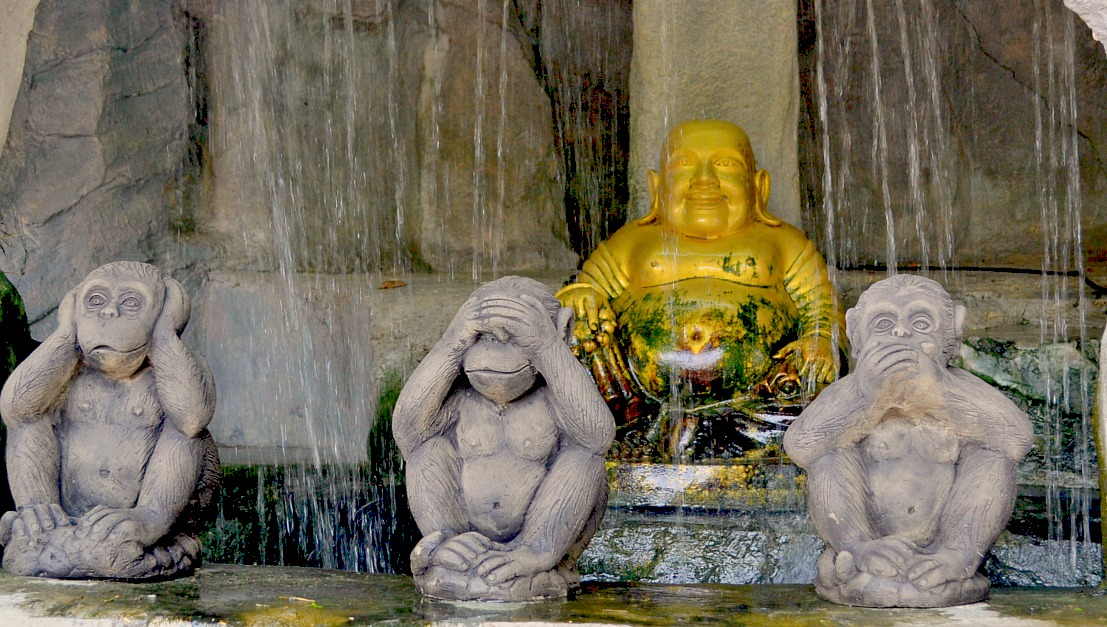
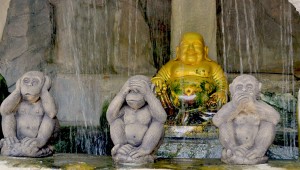 During a recent trip to Thailand, I came across statues of the three wise monkeys. They were accompanied by a gold colored Buddha, set in a cave where a continuous stream of water fell from above, whose trickling sounds added a feeling of peace. I do not know the history behind this setting or how old it is. It was one of those coincidences we experience in our lives, as the three wise monkeys had been on my mind prior to travelling 12000 km and accidentally finding this special spot.
I’m not the only one apparently, as there are many worldwide collectors of the different styles and materials used in producing statues, that depict the three wise monkeys.
It is not clear as to their origins, but it is thought to have occurred 400 years ago in Japan where the three monkeys are known as Mizaru, who covers his eyes and sees no evil; Kikazaru, who covers his ears and who hears no evil; and Iwazaru, who covers his mouth and speaks no evil.
In Buddhist tradition, the proverb is about not dwelling on evil thoughts. Depending on the country, there are various meanings attached to the three wise monkeys that relate to being of good mind, speech and action.
It may also signify a code of silence in gangs, or organized crime.
Monkeys have been held sacred and/or in high esteem for centuries: the Hanuman Languor in India, the Rhesus Macaque in China and the Japanese Macaque (Snow Monkey) in Japan. Monkey folklore existed centuries before Taoism, Buddhism or Confucianism.
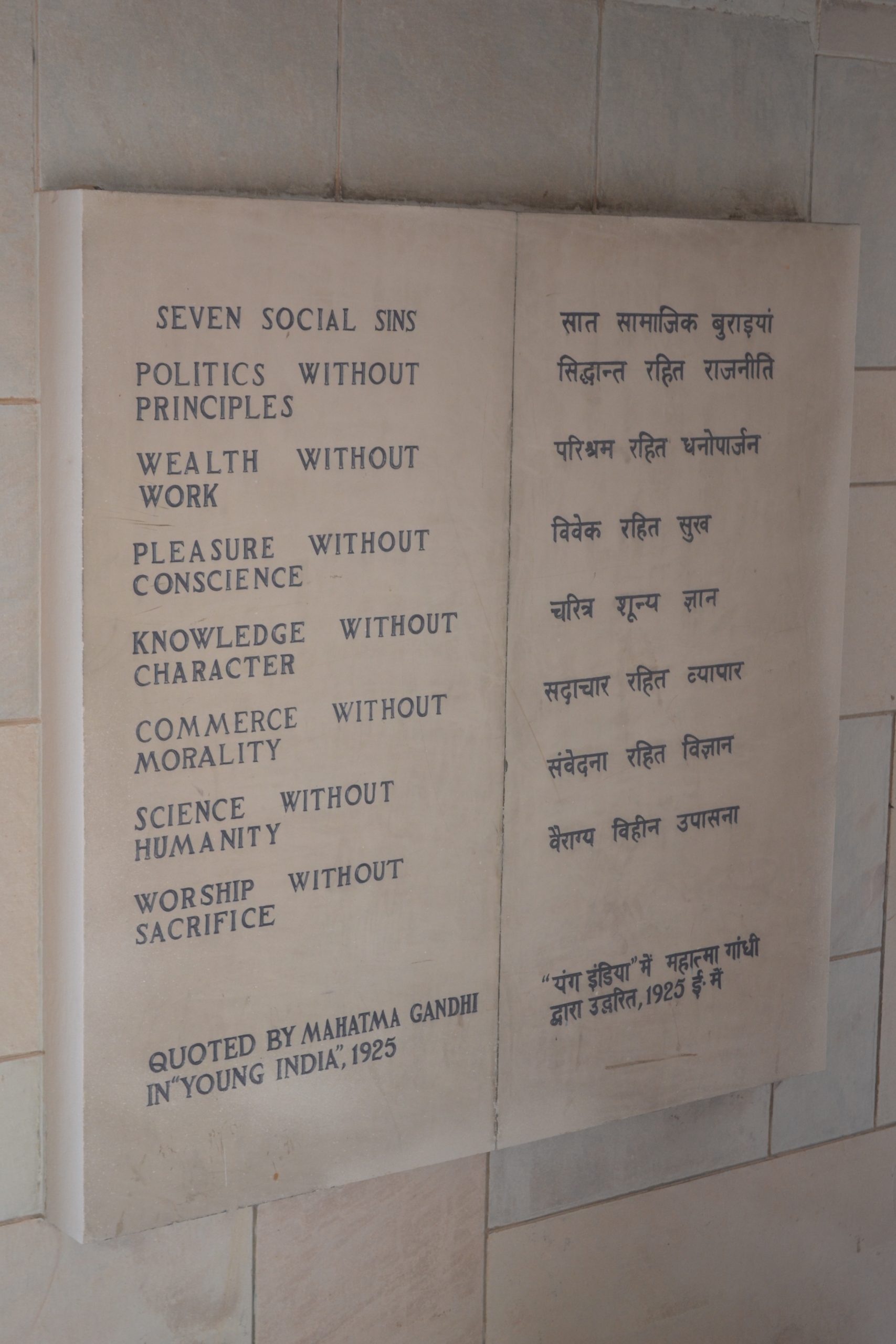
Mahatma Gandhi was the leader of the Indian independence movement and among other attributes, author of the Seven Social Sins. The one notable exception to his lifestyle of non-possession was a small statue of the three monkeys. There seems to be a parallel between Gandhi’s seven social sins and the proverb of the three wise monkeys. The photo below was taken at the tomb site of Mr. Gandhi in New Delhi, India. Proverbs are used in numerous cultures, the most well known source being the Book of Proverbs in the Bible.

by Brian | Dec 8, 2014 | Stress, Wellness Matters
The impact of stressors on our wellbeing is often overlooked. Many of us are unclear what a stress response is and what affect it has on our health. The excerpt below from a HeartMath article points out the role emotions play in creating the stress response in our bodies.
 What is “Stress?”
“Stress comes from our perception and emotional reactions to an event or idea. It can be any feeling of anxiety, irritation, frustration, or hopelessness, etc. Stress is not only created by a response to an external situation or event. A lot of daily stress is created by ongoing attitudes, that is, recurring feelings of agitation, worry, anxiety, anger, judgments, resentment, insecurities and self-doubt. These emotions are known to drain emotional energy while engaging in everyday life. It is emotions—more than thoughts alone—activating physical changes that make up the “stress response.” Emotions trigger the autonomic nervous system and, in turn, trigger stress hormones that cause many harmful effects on the brain and body. Stressful feelings actually lead to a chaotic pattern in the beat-to-beat changes in the heart’s rhythm–indicating that our nervous system is out of sync. When this happens, a cascade of over 1,400 biochemical changes are set in motion that have a wide range of effects on the body’s systems.”
After this release of biochemicals and especially if it occurs chronically, damage to our health and wellness can occur.
Click here to reach the HeartMath website, which contains a wealth of information on stress. It is currently offering “free access to the HeartMath experience” on its website at the time of this update, September16, 2022.